-
Courses
Courses
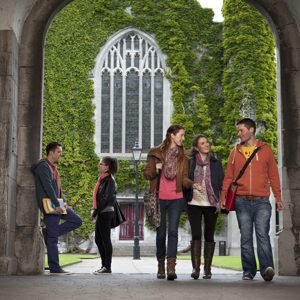
Choosing a course is one of the most important decisions you'll ever make! View our courses and see what our students and lecturers have to say about the courses you are interested in at the links below.
-
University Life

University Life
Each year more than 4,000 choose University of Galway as their University of choice. Find out what life at University of Galway is all about here.
-
About University of Galway
About University of Galway
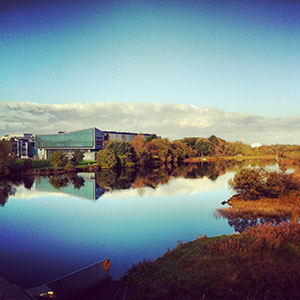
Since 1845, University of Galway has been sharing the highest quality teaching and research with Ireland and the world. Find out what makes our University so special – from our distinguished history to the latest news and campus developments.
-
Colleges & Schools
Colleges & Schools
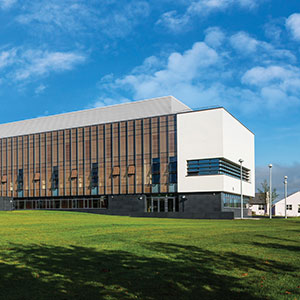
University of Galway has earned international recognition as a research-led university with a commitment to top quality teaching across a range of key areas of expertise.
-
Research & Innovation
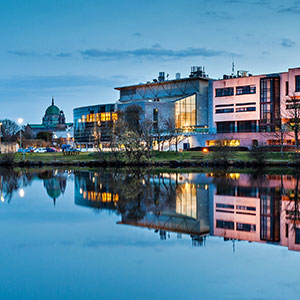
Research & Innovation
University of Galway’s vibrant research community take on some of the most pressing challenges of our times.
-
Business & Industry
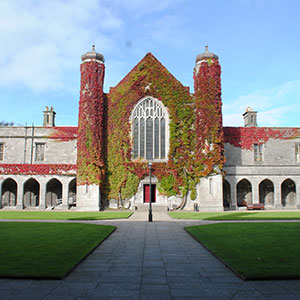
Guiding Breakthrough Research at University of Galway
We explore and facilitate commercial opportunities for the research community at University of Galway, as well as facilitating industry partnership.
-
Alumni & Friends
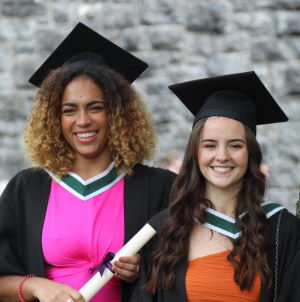
Alumni & Friends
There are 128,000 University of Galway alumni worldwide. Stay connected to your alumni community! Join our social networks and update your details online.
-
Community Engagement
Community Engagement
At University of Galway, we believe that the best learning takes place when you apply what you learn in a real world context. That's why many of our courses include work placements or community projects.
 Accessibility & Language
HBC - Cancer
Cancer
Overview of Health Based Challenge: Cancer
Aims
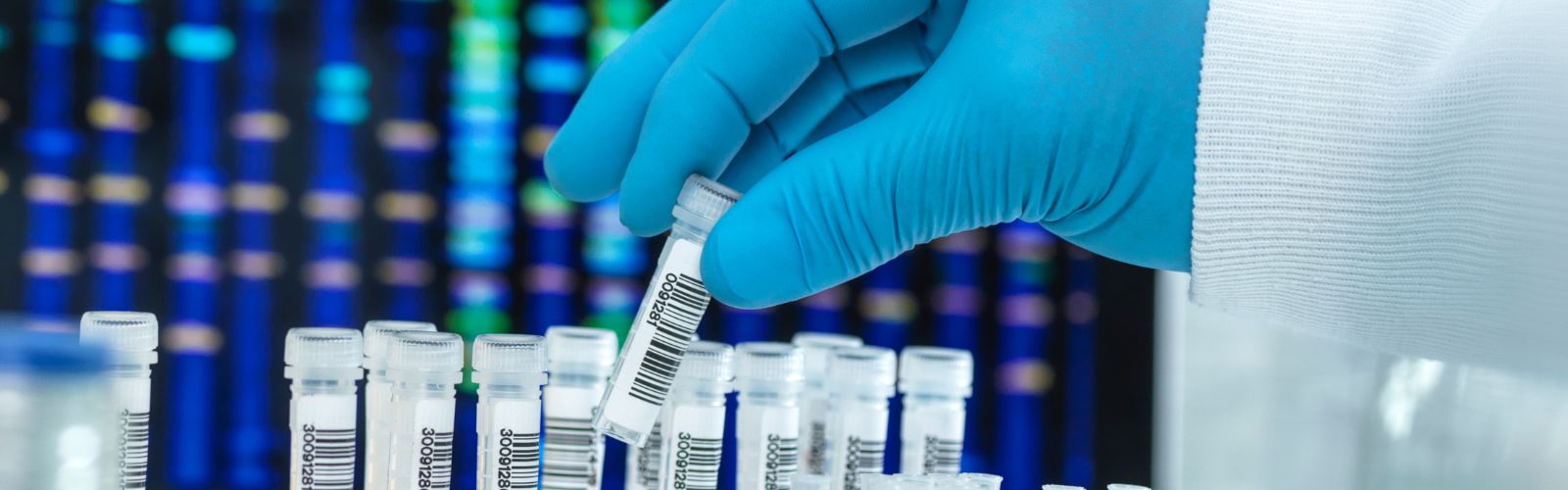
Our research is dedicated to reducing the burden of cancer through a comprehensive and multidisciplinary approach. We focus on advancing the understanding of cancer biology, tumour progression, metastasis, immune responses, and treatment resistance. We aim to develop and evaluate innovative diagnostics, biomarkers, therapeutics, medical devices, and cell-based therapies that improve early detection, treatment selection, and patient outcomes.
Our work spans fundamental discovery science, and translational research, to support future clinical trials, health services research, survivorship, rehabilitation, and population health. We aim to harness advances in genomics, bioinformatics, artificial intelligence, precision medicine, and cellular therapies to deliver more personalised and effective cancer care.
Through partnerships with healthcare professionals, researchers, industry, patients, and international collaborators, we seek to accelerate the translation of research discoveries into real-world impact for people affected by cancer.
This challenge will build upon and strengthen existing University of Galway cancer research strengths, including partnerships with the HSE West and North West, University of Galway Cancer Centre and the international Biseach Initiative, creating a coordinated platform for discovery, translation, clinical impact, and patient engagement.
Research Focus
Cancer Biology and Molecular Medicine
Tumour biology, metastasis, DNA replication and repair, apoptosis, glycobiology, cell signalling, cancer stem cells, biomarker discovery, treatment resistance.
Immunology and Cellular Therapies
Cancer immunology, tumour microenvironment, immune modulation, CAR-T and CAR-NK therapies, engineered cell therapies, precision immunotherapy.
Precision Oncology and Genomics
Cancer genomics, molecular profiling, precision medicine, predictive biomarkers, bioinformatics, translational omics.
Diagnostics and Medical Technologies
Advanced imaging, liquid biopsies, diagnostic platforms, point-of-care technologies, digital pathology, medical devices and biomaterials.
Engineering and Digital Health
AI-enabled diagnostics, digital health technologies, predictive modelling, computational oncology, medical device innovation.
Objectives
This Health-Based Challenge is committed to creating a collaborative and innovative environment that advances cancer research across the University and partner organisations.
We aim to:
- Foster interdisciplinary collaboration across all Colleges and Institutes.
- Strengthen links between discovery science, translational research, and clinical practice.
- Support the development of internationally competitive research programmes and centres.
- Enhance capacity for clinical trials, biobanking, and precision oncology.
- Increase success in national and international funding programmes.
- Facilitate strategic partnerships with healthcare providers, patient groups, industry, and international collaborators.
- Promote meaningful public and patient involvement in cancer research.
- Support researcher development, training, and networking opportunities.
- Accelerate translation of research discoveries into diagnostics, therapies, and improved patient outcomes.
- Establish the IHDI as a recognised leader in cancer research, innovation, and impact.
Strategic Partnerships
HSE West and North West, University of Galway Cancer Centre
The Cancer Centre is a designated OECI Cancer Centre and an academic-clinical partnership between the University of Galway and HSE West and North West.
The mission of the Cancer Centre is to deliver high quality multidisciplinary cancer care to all patients within the west and northwest of Ireland, coupled with innovative and patient relevant cancer research, meeting the quality standards of a European accredited OECI Cancer Centre.
Research facilities include University of Galway campus laboratories, and the Lambe Institute for Translational Research, co-located with University Hospital Galway, the Cancer Biobank and the Clinical Research Facility.
Website: www.universityofgalway.ie/cancercentre/
Biseach Initiative
The Biseach Initiative is an international cancer research collaboration between the University of Galway and the University of Notre Dame's Harper Cancer Research Institute. The initiative promotes multidisciplinary research, researcher mobility, knowledge exchange, and the development of innovative approaches to improving cancer outcomes through global collaboration.
Website:
Biseach Initiative - Improving Cancer Outcomes Through Collaborative Research
Cancer HBC Leads - Prof. Cathal Seoighe
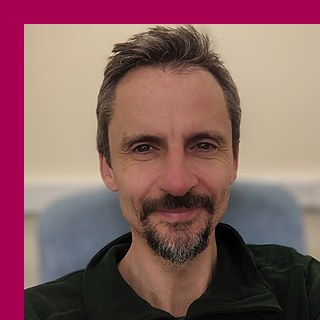
Prof. Cathal Seoighe is Professor of Bioinformatics in the School of Mathematical and Statistical Sciences, University of Galway. His research is interdisciplinary, typically involving the development and application of computational methods for the analysis of genome-scale biological data. Research interests span several areas of bioinformatics and computational biology, including cancer genomics, genetic variation in gene expression, allelic imbalance and molecular evolution. The biological focus of his research has encompassed much of the tree of life, from yeast and viruses to plants and animals, including research into human health and disease, with a particular focus in recent years on cancer. His research group has developed R packages that have been widely used in applications such as gene expression deconvolution and cancer mutational signature analysis.
He has an undergraduate degree in Theoretical Physics and a PhD in Bioinformatics, both from Trinity College Dublin. After a postdoctoral research fellowship at the Royal College of Surgeons in Ireland he moved to the University of the Western Cape and then the University of Cape Town in South Africa, where he carried out genomics research and worked closely with researchers involved in the development of a vaccine for HIV. He returned to Ireland as Stokes Professor of Bioinformatics at the University of Galway in 2009.
He has a strong interest in graduate education and is Director of the Research Ireland Centre for Research Training in Genomics Data Science, a €16M project funded by Research Ireland and other sources, which has trained 100 PhD students at universities across Ireland. He is also the coordinator of a €5M award to train a cohort of PhD students to use AI and computational modelling to accelerate the development of cellular therapies in Ireland.
Together with Walter Kolch at UCD he is co-lead of the data integration and modelling research pillar of Rinn Advanced Therapies, a major national research initiative to develop and implement cellular therapies in Ireland. Tá suim ar leith aige chomh maith spás a chruthú don Ghaeilge san eolaíocht agus tá sé gníomhach i dtogra náisiúnta STEM as Gaeilge.
Cancer HBC Leads - Dr Eimear Dolan
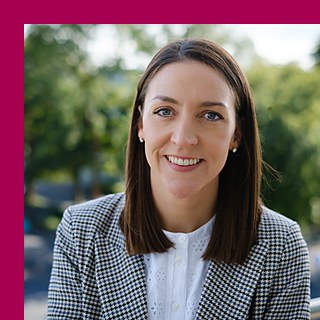
Dr Eimear Dolan is a Royal Society Research Ireland University Research Fellow and Associate Professor of Biomedical Engineering at the University of Galway. She is a member of the Institute for Health Discovery and Innovation (IHDI) and leads a multidisciplinary research programme focused on designing next-generation medical implants to improve outcomes and quality of life for people living with chronic conditions such as cancer, diabetes, and cardiovascular disease.
Dr Dolan's research sits at the interface of engineering and medicine, combining fundamental discovery with translational innovation. Her team uses in vitro, in vivo, and computational approaches to develop implantable and soft robotic medical technologies with applications in drug delivery, disease treatment, and long-term patient care. She currently leads major research initiatives supported by Research Ireland and Enterprise Ireland, is a Bionnovate mentor and is the “Smart Implants” theme lead for the ARC Hub for Health technology.
A graduate of the University of Galway, Dr Dolan subsequently held research positions at Trinity College Dublin, RCSI University of Medicine and Health Sciences, and the Massachusetts Institute of Technology (MIT). She has received numerous national and international awards, including recognition as one of MIT Technology Review's Innovators Under 35 and one of ten global "Visionaries" in 2020. Her work has been published in leading journals including Science Robotics, Nature Communications, and Advanced Science.
Cancer HBC Leads - Prof. Corrado Santocanale
_320.jpg)
Professor Corrado Santocanale is Professor of Molecular Medicine at the University of Galway and a principal investigator within the Institute for Health Discovery and Innovation (IHDI) and the Centre for Chromosome Biology. His research focuses on the molecular mechanisms that control DNA replication, genome stability, and cell cycle progression.
Professor Santocanale earned a PhD in Cellular and Molecular Biology from the University of Milan before undertaking postdoctoral research at Cancer Research UK’s Clare Hall Laboratories in London. He subsequently spent eight years in oncology drug discovery at Pharmacia/Pfizer and Nerviano Medical Sciences, where he led programmes developing novel kinase inhibitors for cancer treatment. He joined the University of Galway in 2007 and has since established an internationally recognised research programme investigating DNA replication control and DNA replication stress in normal and cancer cells.
His research has contributed significantly to the understanding of DNA replication checkpoints and how the CDC7 kinase promotes the duplication of the genome, providing important insights for the development of next-generation cancer therapies.
More Information
To learn more about the Institute's Pillars and Health Based Challenges, please contact the leads directly, or email the institutute.